Relativity Without Time Travel
SERIES II — GRAVITY & RELATIVITY
Stress, Not Curvature
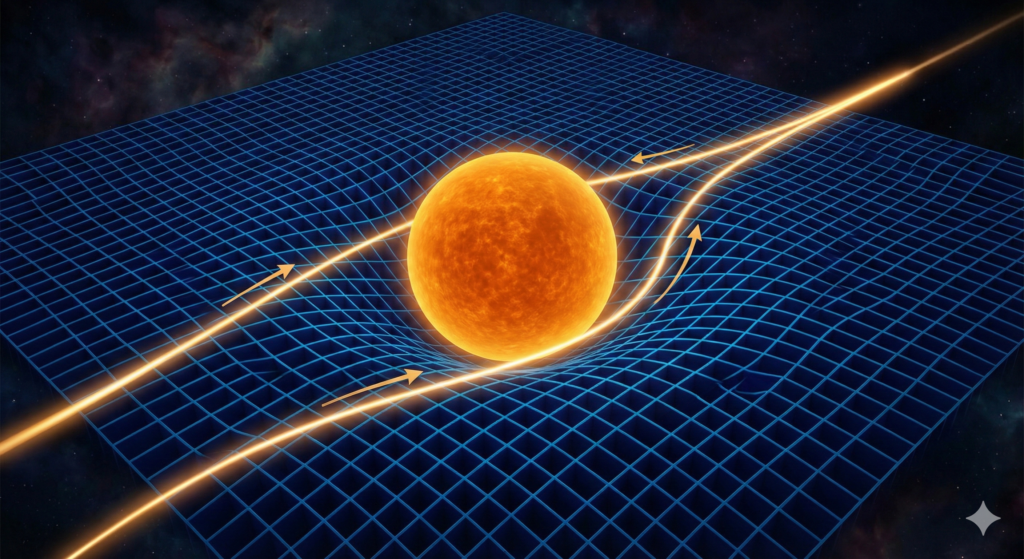
Time dilation is one of the most famous—and most misunderstood—predictions of modern physics. Clocks in motion tick more slowly. Clocks in stronger gravitational fields tick more slowly. These effects are measured routinely and agree precisely with theory.
What remains unclear is why this happens.
This post argues for a careful rephrasing:
Time itself does not slow down. Physical clocks do.
That distinction preserves every experimental result while removing the need for time to behave as a substance that stretches, compresses, or travels.
What Relativity Actually Shows
Special and General Relativity, developed by Albert Einstein, describe how measurements of time and space depend on motion and gravity. The mathematics is unambiguous, and the predictions are correct.
But equations alone do not specify mechanism.
Relativity tells us:
- how clock rates compare,
- how signals synchronize,
- how intervals transform.
It does not tell us what changes inside a clock when its rate changes.
That question is usually set aside.
What Is a Clock, Mechanically?
A clock is not time itself.
It is a physical oscillator.
- An atomic clock counts transitions.
- A pendulum clock counts swings.
- A light clock counts reflections.
In every case, a clock’s “tick” is a physical process governed by wave propagation, force balance, and structural response.
If those processes are affected by motion or stress, the clock rate must change—without invoking time as a mutable substance.
The Light Clock as a Mechanical Device
The light clock is often used to illustrate time dilation. A pulse of light bounces between two mirrors; each round trip defines a tick.
In relativity, a moving light clock ticks more slowly because the light travels a longer diagonal path.
Mechanically, the same result follows if:
- light propagates at a fixed speed relative to a medium,
- the clock’s internal structure experiences directional stress,
- wave paths are lengthened by deformation or flow.
The geometry tracks the outcome.
The mechanism lies in the clock’s interaction with the medium.
Motion as Stress, Not Kinematics
In a mechanical medium, uniform motion is not just a coordinate change—it corresponds to a steady stress–flow condition.
That stress affects:
- wave propagation inside the clock,
- equilibrium spacing of components,
- effective path lengths and oscillation periods.
From this perspective, time dilation is not time “slowing.”
It is every physical process slowing together because the medium’s response has changed.
This is why no internal experiment can detect the change—every process is affected equally.
Gravity and Clock Rates
Gravitational time dilation is often described as clocks running slower “deeper” in curved spacetime.
Mechanically, the interpretation is simpler:
- gravity corresponds to a stiffness gradient,
- wave speeds vary slightly with position,
- oscillatory processes take longer to complete cycles.
Nothing mystical happens to time.
Clocks respond to local material conditions.
This is directly analogous to oscillators running at different rates in materials with different elastic properties.
Lorentz Transformations Without Metaphysics
The transformations introduced by Hendrik Lorentz relate space and time measurements between observers. These transformations remain exactly correct in a mechanical interpretation.
What changes is their meaning.
Rather than describing how time itself stretches and mixes with space, they describe how physical processes reorganize under stress and motion in a medium with a fixed characteristic wave speed.
The math survives. The metaphysics simplifies.
What This Does—and Does Not—Claim
This post does not claim:
- that time is absolute in the Newtonian sense,
- that relativity is incorrect,
- or that clocks malfunction.
It does claim:
- that time is measured, not deformed,
- that clocks are physical systems,
- and that their rates change for mechanical reasons.
Relativity describes the rules.
Mechanics explains the behavior.
Why This Matters
Interpreting relativity mechanically:
- removes paradoxes involving “time travel,”
- clarifies why all clocks agree locally,
- preserves causality without abstraction,
- and prepares the ground for understanding quantum and gravitational constraints.
Time does not flow differently in different places.
Physical processes do.
With that clarification in place, we can move beyond geometry and begin examining how structured matter organizes itself within the medium.
Next:
→ The Periodic Table Is a Standing Wave